Introduction
Battery contact resistance is one of the most important factors affecting battery system performance. Higher contact resistance increases voltage drop, generates additional heat, and reduces overall efficiency during high-current operation.
This test compares the internal resistance performance of a copper-contact battery holder and a traditional steel-contact battery holder using the same EVE INR21700 40PL cell.
Test Equipment
- FNIRSI HRM-10 Internal Resistance Meter
- EVE INR21700 40PL Cell
- Bistook Copper 21700 Battery Holder
- Traditional Steel Contact Battery Holder
Test Procedure
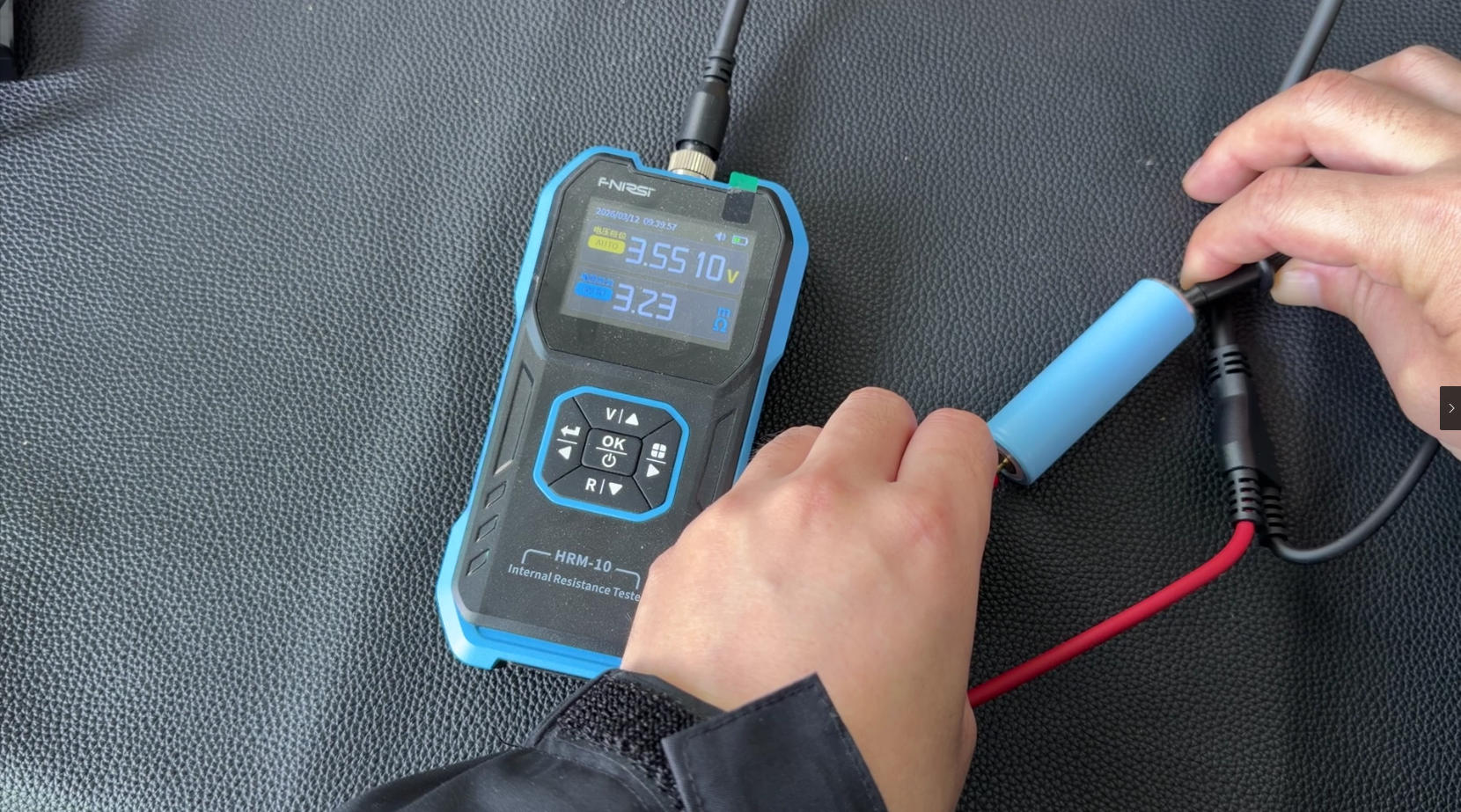
- Measure the internal resistance of the EVE INR21700 40PL cell directly.
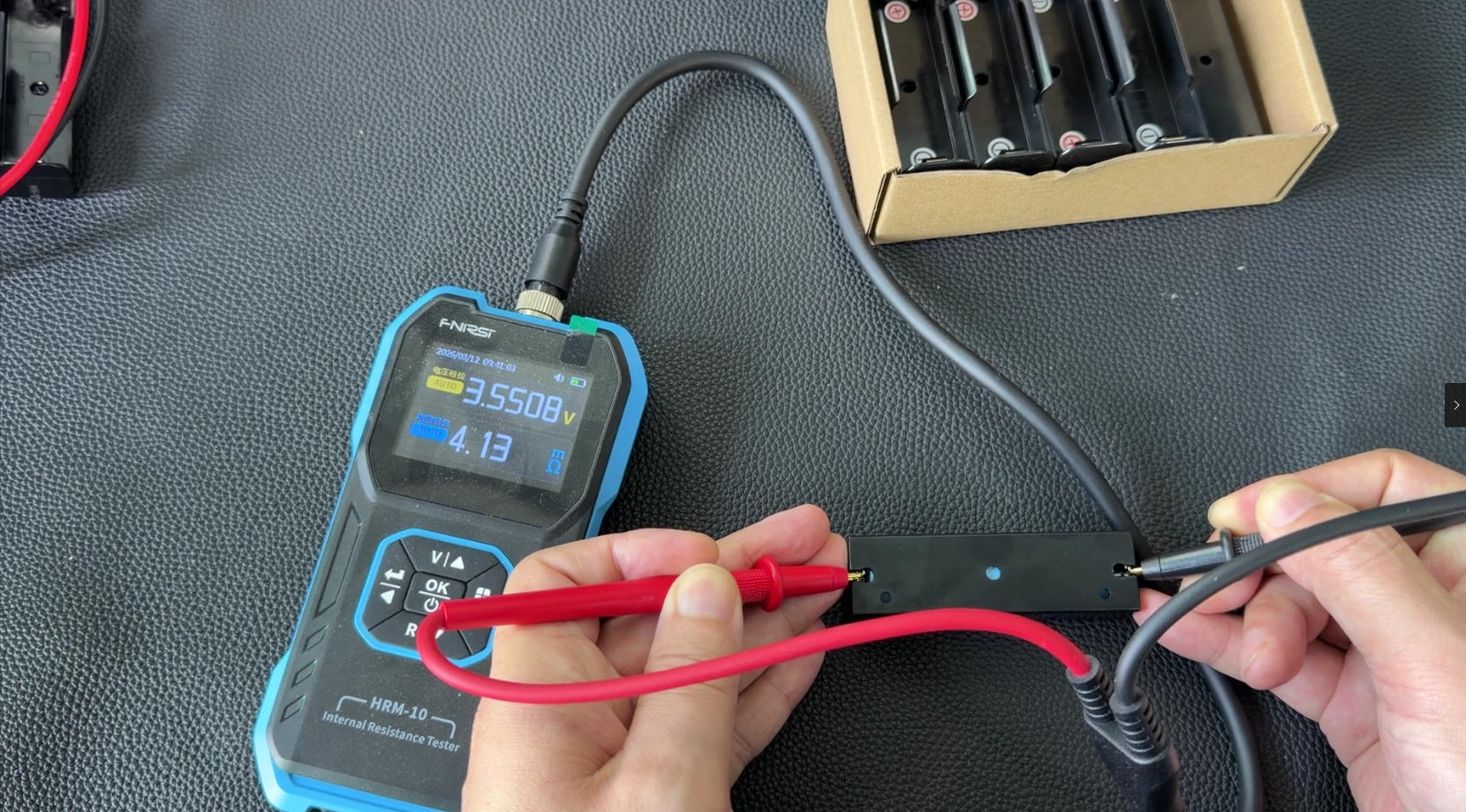
- Install the same cell into the Bistook copper-contact battery holder and measure the total resistance.
- Install the same cell into a traditional steel-contact battery holder and measure the total resistance.
- Record and compare all results.
Test Results
| Test Item | Measured Resistance |
|---|---|
| EVE INR21700 40PL Cell Only | 3.23 mΩ |
| Bistook Copper Battery Holder | 4.13 mΩ |
| Traditional Steel Battery Holder | 13.98 mΩ |
Resistance Increase Analysis
| Configuration | Additional Resistance |
|---|---|
| Copper Holder | 0.90 mΩ |
| Steel Holder | 10.75 mΩ |
The copper battery holder increased total resistance by only 0.90 mΩ compared with the bare cell measurement.
The steel battery holder increased total resistance by 10.75 mΩ.
Compared with the steel-contact holder, the copper-contact holder demonstrated substantially lower additional resistance.
Engineering Significance
In high-current battery systems, every milliohm of resistance contributes to additional voltage drop and heat generation.
Lower contact resistance helps improve power delivery efficiency and reduces energy loss during operation.
This is particularly important in applications such as:
- Portable power stations
- Battery pack development
- Robotics
- High-power LED systems
- Radio communication equipment
- DIY battery projects
Conclusion
The test results demonstrate that the Bistook copper-contact battery holder maintains a very low resistance path when used with an EVE INR21700 40PL cell.
Measured resistance increased from 3.23 mΩ to 4.13 mΩ, indicating only 0.90 mΩ of additional resistance introduced by the holder.
Under the same test conditions, the traditional steel-contact holder measured 13.98 mΩ, showing significantly higher resistance.
For high-current battery applications where efficiency and thermal performance are important, low-resistance copper contacts provide a clear engineering advantage.